Omega Centauri
Globular cluster in Centaurus
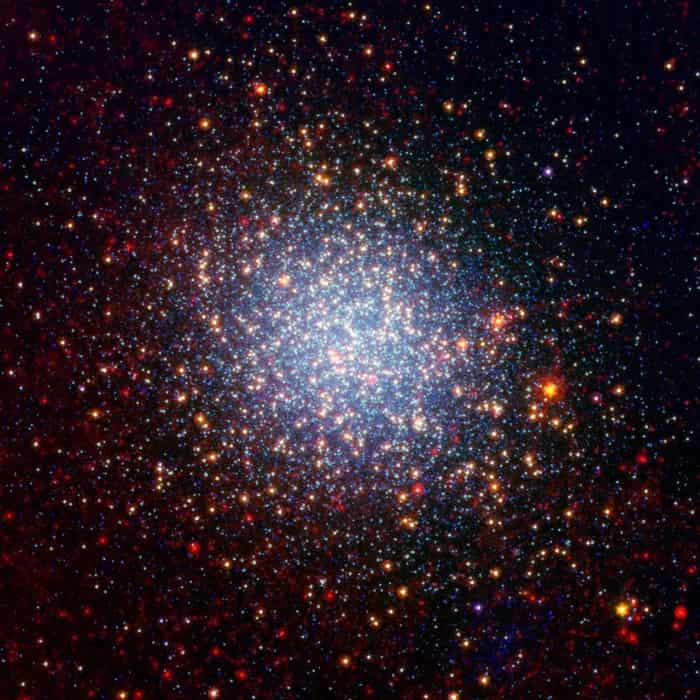
A massive, dense cluster of stars that are the remains of a dwarf galaxy cannibalized by our Milky Way.
Designation: NGC 5139
Other names: Lacaille I.5, Dunlop 440, Bennett 61, Caldwell 80
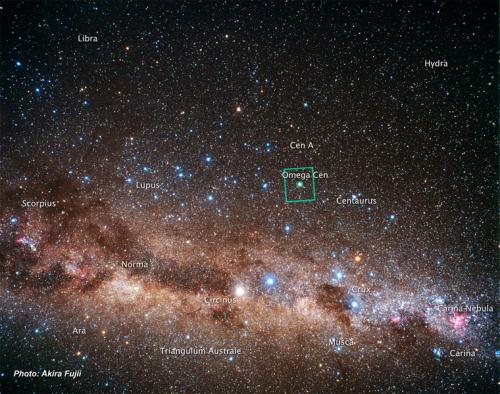
Location: Centaurus (13h 26.8m, −47° 28.7ʹ)
Angular size: 0.9°
Size: 300 light years
Distance: 16 000 light years
Age: 12 billion years
Luminosity: 800 000 Suns
Highlights:
- Contains 10 million stars.
- Is the largest, most luminous and most massive globular cluster in our Galaxy.
- One of the few globular clusters visible to the naked eye, appearing about as large as the Full Moon.
- In the core the stars are only one-tenth of a light year apart.
- First observed through a telescope in 1677 by Edmond Halley (of comet fame) while visiting the island of St. Helena as a young man.